 |
| Nandi near Chamundi Hills |
Next
we went to Wax Museum (Entry fee Rs.30
and Camera Fee Rs.10) where we saw the wax statues of different musicians
playing different instruments and we took photos near Superman and other
statues.
 |
| Wax Museum |
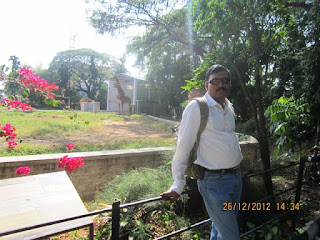
We reached Mysore Zoo at 2:30 PM (Entry fee Rs.40 per person and for Camera Rs.20). We had our lunch there which we brought. On our entry a big Giraffe welcomed us, we thought it’s a statue as the Giraffe was still and then it moved slightly, only then we realized it’s a real one. It’s very tall and we saw few more Giraffes roaming around there. We saw variety of birds. Red headed eagle attracted me a lot as it was sitting majestically like a king.
Then we also saw tiger, deer, bear, chimpanzee, gorilla, elephant and snakes. By that time it was 4.30pm, we moved from there to next point.
 |
| Mysore Zoo |
Mysore Palace is located in
the heart of the city. Mysore Palace is one of the most visited monuments in
India. And it’s one of the largest palaces in the country, also known as Amba Vilas Palace, was the
residence of the Wodayar Maharaja's of the Mysore state.
The Palace built in Indo-Saracenic style and blends together Hindu, Muslim,
Rajput, and Gothic styles of architecture. It is a three-storied stone
structure, with marble domes and a 145 ft five-storied tower. Above the central
arch is an impressive sculpture of Gajalakshmi, the goddess of wealth,
prosperity, good luck, and abundance with her elephants. The palace is
surrounded by a large garden, designed by the well-known British architect,
Henry Irwin. The palace is a treasure house of exquisite carvings and works of
art from all over the world.
The palace is
now converted into a museum that treasures souvenirs, paintings, jewellery royal
costumes and other items, which were once possessed by the Wodayars. It's a
Kaleidoscope of stained glass & mirrors. The ground floor with an enclosed
courtyard displays costumes, musical instruments, children toys and numerous
portraits. The upper floor has a small collection of weapons. The beautifully
carved mahogany ceilings, solid silver doors, white marble floors and superb
columned Durbar Hall are a feast to the eyes. The marriage pavilion or the
Kalyana Mandapa with a centre octagonal gabled roof, covered by stained
glasses, is to the south of the building. The flooring of this magnificent
Kalyana Mandapa has artistic geometrical patterns created by using glittering
glazed tiles imported from England. The building has gorgeous chandeliers of
Czechoslovakian make.
 |
| Mysore Palace |
The royal
throne, regal seat of the palace is called the ChinnadaSimhasana or
RatnaSimahasana with captivating artwork on its gold plates is displayed during
the Dussehra festival. The Maharajas of Mysore used to sit on the golden throne
and hold durbars in the Palace Durbar Hall. The paintings of eight
manifestations of Goddess Shakthi (strength) and an original painting of the
renowned painter Raja Ravi Verma are also on display. The palace complex has a
selection of twelve Hindu temples. The oldest of these was built in the 14th
century, while the most recent was built in 1953. Someshvara Temple, dedicated
to God Lord Shiva and Lakshmiramana Temple, dedicated to God Lord Vishnu are
some of the more famous temples.
 |
| Mysore Palace |
A silhouette of the Mysore Palace illuminated with 98,260 bulbs, shimmering against an inky black night is one of the most enduring images of the city. Although tourists are allowed to visit the palace, they are not allowed to take photographs inside the palace. Mysore Palace is the venue for the famous Mysore Dussehra Festival, during which leading artists perform on a stage set up in the palace grounds. On the tenth day of the festival VijayaDashami, a parade with caparisoned elephants and other floats originate from the palace grounds.
It took 2 1/2 hours for us to see the two buildings and they charged Entry fee for first Main palace Rs.40 and the second museum building fee Rs.35 per person.
After that we went to Brindavan
Garden which is situated on Krishna Raja Sagar (KSR) Dam 19kms from Mysore
City. (Entry fees Rs.15 per person) It has nice garden full of
fountains and at 7PM the "musical fountain" light and music show
begins. We reached there by 7.30pm and
by that time the garden was illuminated by light and we enjoyed musical
fountain also. They played some cine songs in the musical fountain show.
Compared to Akshardham, Delhi musical fountain show, it’s no way spectacular. Boating
facility also is there to move from the garden to Musical fountain. Rs. 10 per
person for one way boating.
We started late in the morning so we missed out some
places on our 1st day plan. Tippu sultan palace & memorial and
Srirangapatna Temple, we missed out due to lack of time. By 8.30pm we were back
to our accommodations. We covered only 5 places in one day.
 |
| Brindavan Garden |
Day
2:
The second day we started earlier by 8.30am from our
hotel and proceeded according to second day tour plan around Mysore city.
 |
| Somnathpura Temple |
First, we went to Somnathpura Temple situated 35 km from Mysore towards Bangalore. Somnathpur is a tiny village which is located on the banks of river Cauvery and is named after its founder Somnath the chief commander of the Hoysala Army. The temple of Somnathpur is a typical example for Hoysala architecture. The stone carving which is inside the temple is an awesome example of stone carving. In the temple, the outer walls are decorated with a series of star-shaped folds and the entire surface is covered with carved stone plaques. The walls above the plinth are also carved with exquisite figures of gods and goddesses, taken from the Hindu puranas, and meticulously arranged in vertical panels. The Keshava temple is one of the finest examples of Hoysala architecture and is in a very well preserved condition. The temple is in the care of the Archeological Survey of India as a protected heritage site and visitors are allowed only from 9:00AM to 5:30PM. Entry fees per person Rs.5 collected by Archeological Survey of India. When I see this temple a thought came in my mind that it looks similar to Tharasuram Temple situated near Kumbakonam.

After that we went to Talakad which is situated 45 km from Mysore on the banks of the river Cauvery. Talakad is known for its sand dunes.
 |
| Talakad Temple |
A
historic site, Talakadu has number of temples that are buried under the sand
dunes. The most imposing temples here are Viadyeshvara, Pataleshvara,
Maruleshvara, Kritinarayana, Gourishankara and the Anandeshvara. The
Pataleshwara Shivalingam is said to change colors during the day (red in the
morning, black in afternoon and white in the evening). The temples buried in
the sand are opened up for ceremonial worship on the occasion when there will
be five Mondays in the month of Karthika and a large number of devotees visit
the place to have panchalinga darshan. It comes once in 12 years, for the first
time in this millennium it had come in just three years 2006 and 2009.

Curse
of Talakad: Talakad is also tagged with the curse called “Curse
of Talakad” by Alamelamma on the Wodeyars of Mysore. She cursed
“Talakadu managali, Malangi madwagali, Mysooru arasarige makkalu aagadirali” which
translates to “May Malangi turn into an unfathomed whirlpool, Talakad turn into
a barren expanse of sand (We can see this place submerged under sand dunes
several meters deep) and the Rajas of Wodeyar not beget male heir”. Till today
whatever she had said stands true.
We
took bath in the river and went boating (parisal). For boating they charged
Rs.20 per person and we negotiated for Rs.15 per person. They collect Rs. 10 per
kid / School children. We saw throughout our trip wherever we go School
children were visiting these places with their teachers. I think in Karnataka,
Schools are arranging these kinds of educational tours and it’s a good thing
for children.
 |
| Barachukki Falls |
Next
we went to Barachukki Falls and it
is located 80 kms from Mysore. We have to climb down around 300 steps (not
sure) to reach the falls. A rocky small pond and falls will invite you to take a
dip. We have to cross a small rocky stream to reach near the falls. In rainy season there is so much of water
that there will be boat facility there. I took bath on the small falls and
taken few photos climbing on the rocks. The water falls refreshed me a lot, but
on return it was difficult to climb up as it was too steep to reach the plains
and made us tired. Few of us got hurt by the rocks.
The
Shivanasamudra Falls is on the Kaveri River after the river has wound its way
through the rocks and ravines of the Deccan Plateau and drops off to form
waterfalls. The island town of Shivanasamudra divides the river into twin
waterfalls. This is a segmented waterfall. The Kaveri River itself is splitting a few kilometers to the
south into western and eastern branches. The western branch results in the twin waterfalls of
Gaganachukki, whereas the eastern branch results in the Barachukki falls. The
Barachukki Falls, gushing out from a height of 250 feet, is very spectacular.
 |
| Gaganachukki Falls |
Then we went to Gaganachukki
falls (also called Bluff) is located near the Shivanasamudra
thermal power station. It was really a breathtaking view from the view point.
We cannot go down near the falls. But there is some other way near dhargah
where we can reach the top of the falls. Some people trek to this place also
but it is very dangerous and we heard few people lost their lives when they try
to go there. So it is not advisable to go there without proper guidance.
It
was 5.00 pm at that time and we planned to return to our hotel room. We almost
travelled 100 km in one way so we needed 2 1/2 hours to reach our hotel. On the
way to our hotel we went to Srirangapattina, a historical place (We missed out
this place on day 1 plan). By the time we reached Srirangapattina it was 7.30
pm and no power was there in that area. We saw Srirangapattina temple only and
we are unable to see Tippu’s Palace. In Srirangapattina Tippu sultan’s palace
and Monument is there but we couldn’t see it because they close that by 6.00pm.
Finally
we reached our Hotel by 9.00pm and had our dinner and taken rest.

Day 3: Four new
members from Chennai joined our group in the morning by 8.00 am. Everyone
refreshed and we vacated the Hotel rooms and proceeded to Coorg by 9 am. We now
booked a Tempo Traveller 13 seater Van for the Coorg sightseeing as our team
strength increased to 13. The road was good and the TT (Tempo Traveller) was
sliding on the road to reach Coorg. We first reached Kushal Nagar (before 40 km
to Coorg) where our accommodation was arranged. We dumped our luggage in the
room and we started our sightseeing from there by 12.00 pm. First we went to
Dubare Elephant Camp located 15 km from Kushal Nagar. The final one Km stretch
was very narrow to reach the dubare and the time was slipping fast. By the time
we reached to the camp site it was 1.00 pm. They said the elephant ride will
close by 12.30 pm and we were upset to hear that. Also white water rafting was
there and during that time there was not plenty of water flowing in the river,
they said no water rafting but only fun rafting we can do. We had no other option
but to go for this. But the good thing is that even kids and old age people can
go for this rafting. They charged Rs.100 per person with life jacket for a 30
min ride. We have to row on this boat and we enjoyed a lot by rowing and singing
“yelelo- I-lesa”. The Guide on the boat stopped at one place near a stream end
and we can get down at that place and can swim or play in the water. But we are
not preplanned for swimming, so we played in the stream and taken lot of photos
by posing differently.
After
our fun ride we had our lunch and we planned to cross the river to see the
elephant camping / elephant ride site, where we can go by motor boat (Rs. 10
per person one way) but I decided to go by wading the river. First most of them
hesitated to come with me. But When I get ready by wearing my shorts and
proceeded in the water stream most of them decided to come along with me.
Because when I entered to the stream they came to know that it was not very
deep and water stream was not so fast. We crossed the river by forming human
chains and reached the other side of the river, where we saw only one aged
elephant standing there. We took some photos near the elephant and returned
back.
 |
| Bamboo Tree Hut |
Then we moved
from there to Nisargadhama Natural Park 3kms from Kushalnagar towards Madikeri
off the state highway. Nisargadhama is a 25 acre island formed by river Kaveri
with bamboos, teak, sandalwood trees, streams and wild life covering it. The
place is filled with thick foliage of Bamboo plants and other trees around the
river which creates the impression of a mini-forest. The island is accessible
through a hanging rope bridge. The Deer, Peacock and children's park are the
main attraction of this place. Also you can take a ride on the elephant around
the Nisargadama. On the day we went, the elephant ride was not operated. We get
into knee deep water at safe points along the river and took few photos. You
can enjoy boating and swimming apart from just watching the natural park. The
forest department runs guest house and treetop bamboo cottages for guests. We
climbed one of a treetop bamboo cottage and took some photos.
 |
| Hanging Bridge |
 |
| Nisargadama - Kaveri River |
 |
| Paintings on the Wall |
Now the time
was around 6.00 pm and we moved to our next place Tibetan Golden Temple located
4 kms from Kushal Nagar (and 35km from Madikeri). There is no power there at
that time and a dull lighting facility was arranged inside the temple. The
temple is very wonderful and very silent. We missed the real beauty of the
temple in the darkness. We saw a lot of monks there doing prayer in one of the
Temple premises. This Tibetan settlement at Bailkoppa is the second largest
Tibetan settlement outside Tibet. There are over 7,000 monks and students at
the Tibetan monastery. This temple attracts large number of tourists from all
over India. Three 40 feet tall golden Buddha statues namely Buddha,
Padmasambhava and Amitayusare are the major attractions of this Golden Temple in
the main temple complex. The wall of the temple is decorated with colorful
paintings depicting gods and demons from Tibetan Buddhist mythology.
We spent some
time for waiting the lights to come and meditated few minutes. Before that
there is so much of noise from the crowd who visited the temple and after
seeing we sat down in the hall for meditation everybody maintained silence.
After that we
returned to our barracks and took rest.
 |
| Tibetian Golden Temple |
Day 4: We
started today by 8.30 am and proceeded to Talacauvery which is located 44km
from Madikeri and from Kushal Nagar 74km. It was a long journey travelled at a
stretch. On the way to Talacauvery we went to Bagamandala Temple.
Bhagamandala
is situated at the confluence of two rivers, the Kaveri and the Kanika. A third
river, the Sujyothi is said to join from underground. It is considered sacred
as a river confluence (Triveni Sangamam). We saw a lot of people there taking
holy bath in that place. We didn’t prepare for that so we immersed our legs and
moved for temple darshan. The temple here, built in Kerala style, has smaller
shrines dedicated to various gods Bhagandeshwara (Ishwara), Subramanya,
Mahavishnu and Ganapati.
Then we
travelled further 8 km to reach Talacauveri, which is the origin of river
Kaveri on the eastern slopes of Brahmagiri peak at 1350 meters altitude.

An enclosure
around the spring called Gundige is connected to a small pond beside. The water
from the pond goes underground and comes out after about one kilometer down the
hill. We saw two temples there, a Shiva temple and Lord Ganesha’s temple. In
the pond people were taking bath & offering prayers and we decided not to
take bath on that pond as it was not running water. The pandit sitting near the
gundige was giving theertham (kaveri water) to everyone and if we give money he
will pour water on us from the gundige. We heard that, the Trimurtis – Brahma,
Vishnu and Shankar gave darshan to sage Agastya at the holy Ashwantha tree near
the temple.
 |
| Brahmagiri |
From the Talakaveri temple, steep steps lead up to the nearby Brahmagiri peak. It is believed that the 7 great sages called the Sapta Maharishis had performed a special yagna here. It’s little difficult to climb up to the top as the steps are too steep and it was hot at that time. We thought something is there on the top. But nothing is there, but the view was awesome as you can see the entire Brahmagirihills and kodagu range from there. We took lot photos from there in different positions. I saw fencing going along the hill and it was said to be the border of Karnataka and Kerala. I jumped over the fence J crossed border and posed for photos. My group members were shouting at me by seeing this as I was doing some pranks as usual there. We returned from there and had tender coconut water. Everywhere in Mysore we saw lot of tender coconuts available for Rs.15 -20 and the water was very sweet.

We again
proceeded to Madikeri for Lunch. After lunch we went to Abbey falls. On the way
to Abbey falls our TT vehicle got break down, the driver said it stopped due to
empty tank. We scolded the driver for this and asked him to arrange alternative
vehicle. He spoke to somebody for arranging vehicle as the petrol pump was 7 km
away. By the time we were roaming around that place. There was near a small
hillock and my friend said you cannot climb to the hillock; I said I can and
started immediately to climb. It was very straight and not a solid rock, it was
piling of sand and somehow I managed and climbed up. Again people are shouting
at me to return. Some of them told that to get down on the other way but I
descended by the same way as I climbed up. Meanwhile the alternative vehicle
came to pick up, but it was a Tavera, can accommodate only 9 persons and 10 of
our group members occupied that vehicle. Only me and my friend left alone and I
said we will come by walk as the destination is around 2 km (as told by the
Driver). It was a new experience for us to walk on the steep dusty road with my
back pack (they forgot to take from me). On the way we enjoyed coffee
plantations and took photos from there. We almost walked 2.5km before the
vehicle came back to pick up us. We reached the Abbey falls by 5.00 pm and our
group members are returning from the falls saying they are not allowing to take
bath in the falls as it was rocky and not advisable. We plucked some branches
of coffee plant to take home in memory of Coorg. Again we are waiting for our
vehicle there as the driver had gone for filling petrol. After 30 minutes the
vehicle came back to pick us and by that the time it was 6.00 pm.
 |
| Abbey Falls |
Then we went
to Raja’s seat the Sunset point, where the Madikeri Raja would enjoy the sunset
from there and spend the evening. By the time we were there it was 7.30pm and
very dark. We missed out the sunset due to vehicle problem. In Raja seat you
can enjoy Toy train and Musical fountain. Entry fee for Park / Musical fountain
is Rs. 5 and for Toy Train Rs.10. On the way to this Raja seat we went to
Omkareswara Temple located 1 Km away from the heart of the Madikeri town. The Omkareshwara
temple was built by Lingarajendra in 1820 with both Islamic and Gothic style of
architecture. According to stone
inscriptions in the premises, the king killed a Brahmin in order to fulfill his
political ambitions. After the death of Brahmin, the king built this temple to
appease his spirit. A big tank situated opposite the temple is populated largely
by fishes and devotees are allowed to feed them. The Poojari said the Shiva
Lingam worshipped in the temple had been brought from Varanasi.
 |
| Raja's Seat |
In Madikeri, fort and
Museum are there near Raja’s seat but they were closed by 6pm so we could not see them. We returned to our base by 9.30
pm and had dinner.
Day 5: We
started from our room by 8.30 am after vacating it and proceeded to
Mysore in our TT vehicle. We had already booked a train from Mysore at 11.00 am
to Bangalore as our plan for the day was shopping at Bangalore. We reached
Mysore RS around 10.20am and boarded the Tippu express train after settling our
vehicle’s bills. Reached Bangalore around 2.00pm and had our lunch. After our
lunch we decided to go for ISKON temple first. Most of us went by bus and me
and my friends travelled by call taxi and reached ISKON. We had a darshan at
temple and returned to MG Road for shopping and purchased few slippers and
dresses there.
We boarded the train at
Bangalore by 22.40 and reached Chennai the next day Monday 4.40 am. Thus our
tour ended.


